

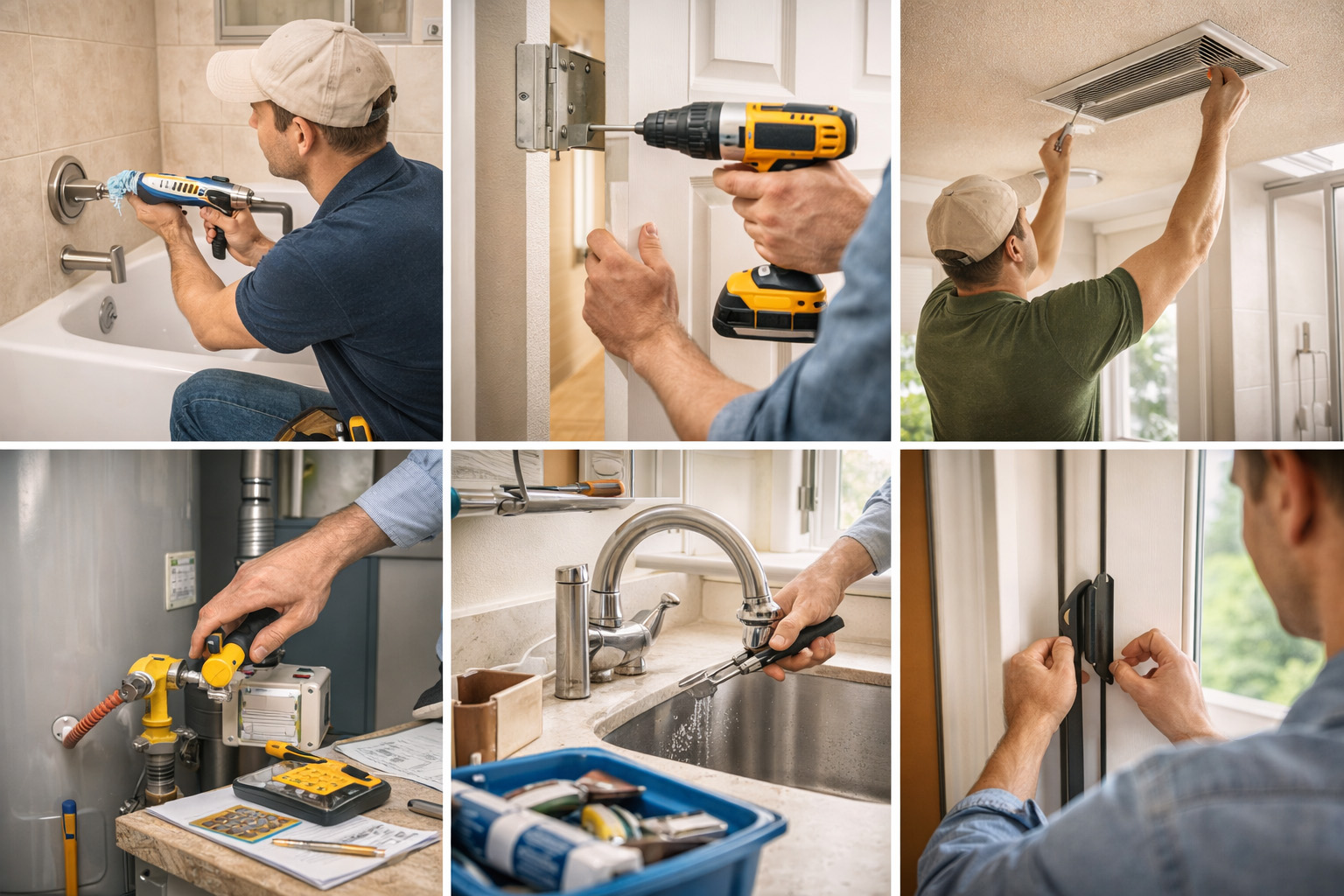

Not all home maintenance is glamorous. There’s a significant difference between the kitchen renovation that gets photographed for Instagram and the dozen small repairs that quietly prevent your home from deteriorating around you. The unglamorous reality of home ownership is that it’s the small, consistent maintenance that protects the investment — not just the major renovations.
These ten small repairs are among the most important for GTA homeowners who want to protect their property value and avoid the much larger expenses that deferred maintenance inevitably creates.
1. Caulking Around Windows, Doors, and Tubs
Caulk is the flexible sealant that fills gaps between surfaces where materials meet and movement occurs. When it cracks, shrinks, or pulls away — which happens over time from temperature cycling, UV exposure, and general wear — it allows water, drafts, and pests to penetrate. Re-caulking windows and doors reduces energy loss. Re-caulking the tub surround prevents water infiltration behind the tile that causes rot and mould in the wall structure. This is a low-cost repair with high consequences when deferred.
2. Weather Stripping on Exterior Doors
Worn weather stripping on exterior doors is visible as a light gap at the door perimeter when the door is closed. It allows conditioned air to escape in summer and winter, increases heating and cooling costs, and creates entry points for moisture and insects. Replacing door weather stripping is inexpensive and typically takes less than an hour per door.
3. Attic Hatch Sealing
The hatch that provides access to your attic is often the least well-insulated point in the ceiling — a significant source of heat loss in winter and heat gain in summer. Adding weatherstripping around the hatch frame and a rigid insulation panel to the back of the hatch door is a small job that meaningfully improves the thermal envelope of the home.
4. Tightening Stair Railings
A stair railing that moves when you grab it is a fall hazard and a code compliance issue. In most cases, tightening is a matter of locating and re-securing the mounting points with appropriate hardware — a 30-minute job that eliminates a genuine safety risk.
5. Smoke and Carbon Monoxide Detector Maintenance
Ontario’s Fire Code requires working smoke detectors on every floor and carbon monoxide detectors near sleeping areas in homes with fuel-burning appliances or attached garages. Detectors that are more than 10 years old should be replaced regardless of whether they test positive — the sensor elements degrade over time and may not respond adequately to actual smoke or CO even when the test function works. Battery replacement in hardwired units with battery backup should be done annually.
6. Furnace Filter Replacement
A clogged furnace filter reduces airflow through the HVAC system, forcing the furnace to work harder, reducing efficiency, and in extreme cases causing heat exchanger damage. Standard 1-inch filters should be replaced every 1–3 months depending on air quality and usage. This is genuinely the simplest and most cost-effective piece of home maintenance that a large percentage of homeowners consistently defer.
7. Dryer Vent Cleaning
Lint accumulation in the dryer vent hose and external vent is one of the leading causes of residential fires in Canada. The external vent flap should open freely when the dryer is running and close completely when it’s not — a stuck-open vent allows cold air, moisture, and pests to enter the home. The vent hose should be cleaned with a vent brush kit annually, or by a handyman if the run is long or difficult to access.
8. Exterior Vent Checks
Soffit vents, gable vents, bathroom exhaust vents, and dryer vents should all be inspected annually to confirm they’re clear of bird nests, insect nests, and debris. A blocked soffit vent reduces attic ventilation, which contributes to ice dam formation in winter and elevated attic temperatures in summer. A blocked bathroom exhaust vent increases bathroom humidity, contributing to mould growth.
9. Driveway and Walkway Crack Sealing
Cracks in concrete and asphalt surfaces are entry points for water. When that water freezes, it expands and widens the crack — the classic freeze-thaw cycle that is particularly destructive in Ontario’s climate. Sealing cracks in late fall, before the first hard freeze, prevents this progression and significantly extends the life of the surface.
10. Touch-Up Painting
Painted surfaces — trim, doors, window frames, and walls — that are chipped, faded, or showing bare substrate are exposed to moisture penetration, particularly on exterior surfaces. Touch-up painting is inexpensive and prevents the kind of surface deterioration that eventually requires full stripping and repainting at significantly greater cost.