

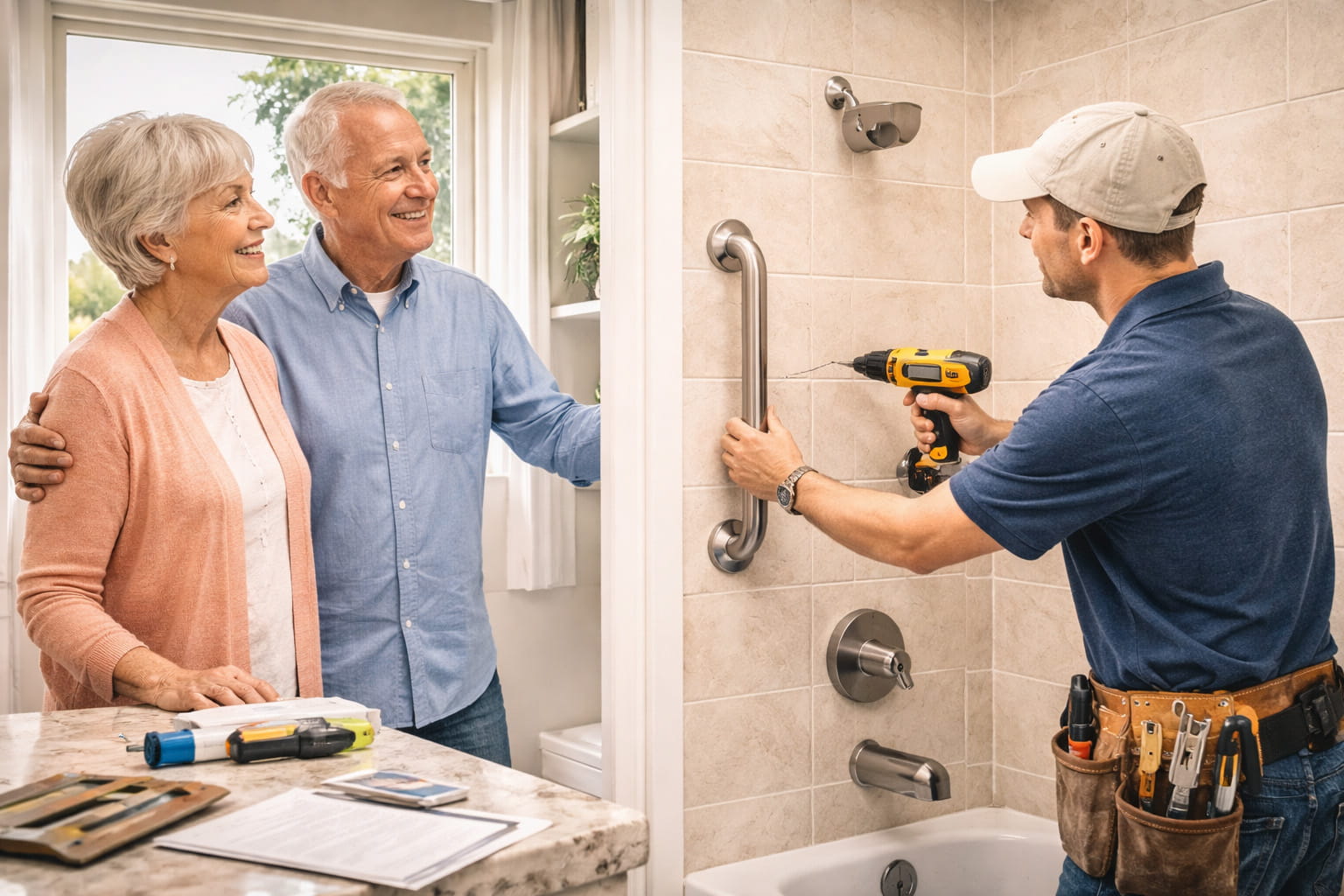

Falls in the bathroom are one of the leading causes of serious injury for seniors in Canada. Statistics Canada reports that falls account for the majority of injury-related hospitalizations for Canadians over 65, and the bathroom — with its hard surfaces, wet floors, and the physical demands of getting in and out of the tub or off the toilet — is where a disproportionate number of these falls occur.
Grab bars are one of the most effective and least expensive preventive measures available. A professionally installed grab bar in the right location provides the stability and support that prevents falls before they happen — making a genuine difference in a senior’s ability to remain safe and independent at home.
Yet many families delay this simple upgrade, either because they underestimate the risk, because they’re unsure where to install bars, or because they associate grab bars with hospital aesthetics and resist the implication. This guide addresses all of those concerns honestly.
Where Grab Bars Should Be Installed
In the Shower or Tub Enclosure
At minimum, a shower or tub enclosure should have two grab bars: one mounted horizontally at approximately waist height on the wall beside the entry point — to provide support getting in and out — and one mounted at an angle or horizontally on the side wall to provide stability while standing and washing. A third bar at lower height provides a support point for sitting on a shower bench or the tub edge.
Beside the Toilet
A grab bar mounted on the wall beside the toilet at approximately the height of the toilet seat provides critical support for both lowering and rising, which are the movements that require the most lower body strength and carry the highest fall risk. If the toilet is in a corner, bars on both the side wall and the back wall provide maximum support.
In Hallways and on Stairs
For seniors with balance concerns, a continuous handrail on any staircase and strategically placed grab bars or wall-mounted handrails in long hallways provide meaningful support throughout the home, not just in the bathroom.
The Importance of Proper Installation
This is where grab bar installation differs critically from a simple DIY project. A grab bar must be anchored into wall studs or with properly rated anchors in tile or concrete backer board. A grab bar that pulls free from the wall when a person’s full weight is applied — which is exactly when it’s needed most — is worse than no grab bar at all.
Me & My Van’s handyman team locates studs, selects the correct hardware for the wall type (drywall, tile over drywall, tile over concrete backer, or solid concrete), and installs bars at the correct height and angle for the user. Every installation is tested for load capacity before completion.
Modern Grab Bar Styles
The institutional chrome grab bar of the hospital aesthetic is no longer the only option. Modern grab bars are available in brushed nickel, matte black, bronze, and white finishes that coordinate with bathroom fixtures. Some manufacturers offer grab bars that double as towel bars — providing function without announcing medical necessity to visitors. If aesthetics have been a reason for delaying this upgrade, the current market offers solutions that will satisfy most homeowners.
The Aging in Place Program
Grab bar installation is a component of SPC Home Solutions’ Aging in Place Program, which coordinates plumbing, electrical, and handyman modifications in a single visit rather than requiring homeowners to schedule and manage multiple contractors separately. The Safety Starter package, starting at $599, includes a grab bar installation alongside an electrical safety walkthrough and written home safety report.